From Global Policy to Local Government: Why Independent Candidates Matter in British Columbia
When British Columbians head to the polls in municipal elections, most voters assume they are choosing local representatives who will focus on practical issues: property taxes, housing, roads, policing, infrastructure, schools, and the quality of life in their communities.
But local government has changed.
Increasingly, local councils, regional districts, school boards, and other public institutions operate within layers of provincial legislation, administrative policies, professional standards, strategic frameworks, and international initiatives.
The result is a system in which decisions that appear local can increasingly be influenced by policies and priorities established far beyond the council chamber.
To understand why many citizens feel their local institutions are becoming less responsive to them, we need to look at how this administrative system works—and why independent, accountable candidates are needed to restore meaningful local democratic oversight.
- The Global-to-Local Pipeline
How do broad international concepts such as ESG, DEI, ICLEI, sustainability frameworks, Indigenous reconciliation initiatives, and the United Nations Sustainable Development Goals make their way into local government?
Often, the process is gradual.
International frameworks can influence federal and provincial policy discussions. Provincial governments can then establish legislation, regulations, funding requirements, professional standards, and policy expectations that affect municipalities and other public bodies.
Municipalities, in turn, develop strategic plans, policies, procurement standards, human-resources practices, climate initiatives, diversity policies, reconciliation strategies, and reporting frameworks.
None of this necessarily means that a United Nations document directly orders a city council to take a particular action. The more important question is how ideas move through the layers of government and become embedded in institutional policy.
A framework that begins as a broad policy objective can eventually become a requirement, target, reporting metric, or organizational expectation at the local level.
That is why citizens should be asking a simple question whenever a new municipal policy is proposed:
Who decided this, what legal authority supports it, and to whom is the decision-maker ultimately accountable?

- Local Government Must Remain Accountable to Local Citizens
British Columbia municipalities do not possess unlimited authority.
Their powers are established primarily through provincial legislation, including the Community Charter and Local Government Act. School districts operate under the School Act and other provincial requirements.
This matters because elected officials are not simply administrators. They have a democratic responsibility to exercise the powers given to them for legitimate public purposes.
Council decisions should therefore be evaluated according to several basic principles:
- Is the decision authorized by law?
- Is it connected to the municipality’s legitimate statutory responsibilities?
- Is there evidence that the policy will achieve its stated objective?
- Has the council considered reasonable alternatives?
- Has the public had a meaningful opportunity to understand and challenge the proposal?
- Is public money being spent responsibly?
- Can citizens identify who is ultimately responsible for the decision?
These questions are not partisan.
They are the foundation of accountable government.
- Freedom of Thought and Expression Matter
Public institutions have legitimate reasons for establishing workplace standards, professional requirements, respectful-conduct policies, and employment qualifications.
But there is an important distinction between requiring professional conduct and requiring individuals to affirm particular political or philosophical beliefs.
The Canadian Bill of Rights 1960 clearly states:
1 It is hereby recognized and declared that in Canada there have existed and shall continue to exist without discrimination by reason of race, national origin, colour, religion or sex, the following human rights and fundamental freedoms, namely,
- (a) the right of the individual to life, liberty, security of the person and enjoyment of property, and the right not to be deprived thereof except by due process of law;
- (b) the right of the individual to equality before the law and the protection of the law;
- (c) freedom of religion;
- (d) freedom of speech;
- (e) freedom of assembly and association; and
- (f) freedom of the press.
That does not mean every government workplace requirement automatically violates the Bill. Nor does every diversity, reconciliation, or inclusion policy amount to compelled speech.
The legal question is more specific:
When does a legitimate workplace requirement cross the line into compelled ideological expression?
That question deserves careful examination rather than slogans from either side.
Public institutions should be particularly cautious when employment, professional advancement, contracts, or participation in public programs is conditioned on expressing agreement with contested political propositions.
A government committed to diversity should also protect diversity of thought.
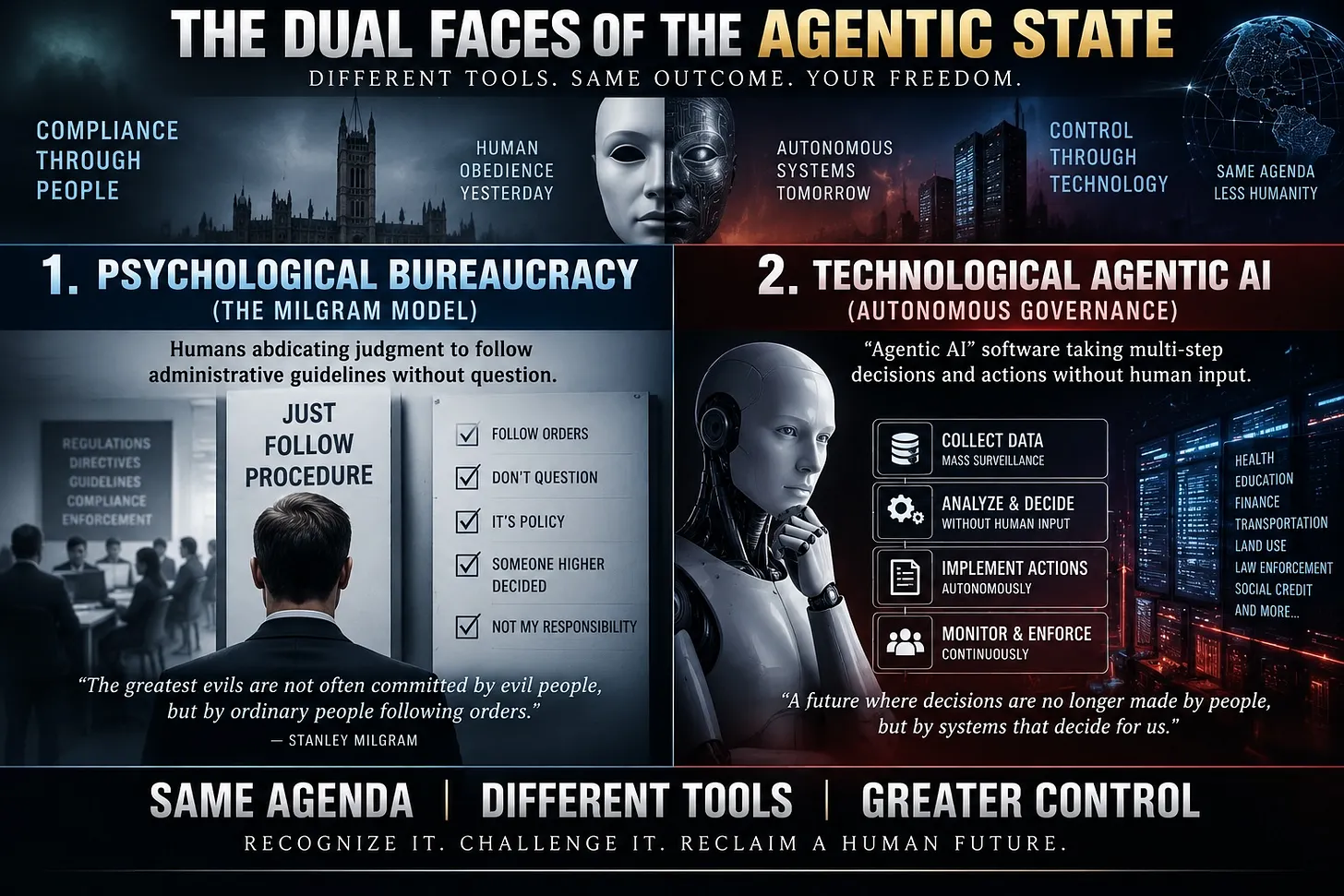
- The Bureaucratic Mindset
There is another problem that cannot be solved simply by changing a policy manual: the psychology of government.
Stanley Milgram’s research famously examined how ordinary people can become increasingly willing to follow instructions from an authority figure.
The broader lesson for democratic government is worth considering.
An elected official can gradually stop thinking of themselves as an independent representative of the public and begin thinking primarily as an administrator whose job is to implement whatever staff, consultants, experts, or higher levels of government recommend.
That creates a dangerous pattern.
“Staff recommends it.”
Staff advice is important. But staff are not elected by the public.
“The province requires it.”
Sometimes the province really does require something. But elected officials should distinguish between an actual legal requirement and a recommendation, guideline, funding condition, or administrative preference.
“That’s just the policy.”
Policies are created by people. They can be reviewed, amended, challenged, and sometimes repealed.
“That’s what the experts say.”
Experts provide valuable information. They do not replace democratic decision-making.
The job of an elected representative is not to reject expertise.
It is to listen to expertise, examine the evidence, hear the public, and then take responsibility for the decision.
We have not forgotten the policies, requirements, and mandates imposed by bureaucrats and experts during the COVID-19 plandemic, nor the consequences they had for our communities, businesses, families, and individual freedoms. That experience should remind us why government power must always be subject to transparency, accountability, and meaningful democratic oversight.
- The Coming Challenge: Automated Government
The next transformation may be technological.
Governments are increasingly using digital systems, automated processes, algorithms, data analytics, and artificial intelligence to manage public services.
Used properly, these technologies can make government faster and more efficient.
But automation also creates a fundamental democratic question:
Who is accountable when an automated system makes a decision that affects a citizen?
Consider a future in which software helps determine permit applications, identifies compliance risks, prioritizes inspections, allocates resources, or evaluates applications for government programs.
If a citizen receives an adverse decision, they should not be told simply:
“The computer made the decision.”
A computer does not possess democratic legitimacy.
A computer cannot be voted out of office.
And an algorithm cannot replace the statutory authority granted to an elected government or public official.
Technology should assist government—not become an excuse for government to avoid responsibility.
Every significant automated decision should therefore have appropriate human oversight, transparency, review mechanisms, and a clearly identifiable decision-maker.
- The Democratic Filter
Independent candidates face another challenge.
Modern municipal politics increasingly requires access to networks, organizations, fundraising, professional communications, social media, established political circles, and institutional visibility.
Candidates who are outside those networks can struggle to receive the same exposure as established political organizations or candidates with strong institutional support.
Debates and public forums can also establish eligibility criteria that unintentionally favor candidates who already have political recognition.
This matters because municipal democracy should not become a closed professional class.
A citizen should not need a political machine behind them to ask questions about taxation, spending, housing, policing, infrastructure, or government accountability.
Independent candidates can provide something the political system desperately needs:
competition of ideas.
- Digital Voting Requires Public Confidence
British Columbia municipalities have increasingly explored or adopted alternative voting methods, including telephone, electronic tabulators and internet voting.
Convenience is valuable.
But convenience should never come at the expense of public confidence.
Election systems must be secure, transparent, auditable, and understandable to the public.
Citizens should be able to have confidence that their vote was recorded accurately and that election results can be independently verified.
The principle should be simple:
The easier voting becomes, the more important transparency becomes.
Election technology should therefore be subjected to meaningful security testing, independent oversight, appropriate auditing, and clear procedures for investigating disputed results.
- Integrity and Accountability
Integrity commissioners and codes of conduct can serve an important purpose.
Elected officials should be held accountable for genuine misconduct, conflicts of interest, misuse of public resources, and violations of established rules.
But accountability mechanisms must never become substitutes for political disagreement.
A councillor who asks difficult questions, challenges staff recommendations, criticizes a government policy, or represents an unpopular constituency is not necessarily acting improperly.
Democracy requires room for disagreement.
Citizens should therefore ask:
Are accountability mechanisms being used to protect the integrity of government—or to discourage elected officials from challenging the prevailing consensus?
- The Choice Before British Columbia
The answer is not to reject government.
It is not to reject expertise.
It is not to reject technology.
And it is not to reject every international initiative simply because it originated outside our community.
The answer is accountability.
Local government should remain close to the people it serves.
Elected representatives should know who they are accountable to.
Public policies should have identifiable legal authority.
Public spending should be transparent.
Technology should remain subject to human responsibility.
Employees should be treated with dignity without being required to surrender freedom of thought.
Experts should advise elected representatives—not replace them.
And citizens should be able to question government without being treated as an inconvenience.
- Why Independent Candidates Matter
Independent candidates have an important role to play in this environment.
They can ask the questions that political organizations sometimes avoid.
They can examine staff recommendations rather than automatically accepting them.
They can challenge unnecessary spending.
They can demand transparency.
They can defend freedom of thought and expression.
They can insist that technology serve citizens rather than replace democratic accountability.
Most importantly, they can remember something that is easy to forget once inside government.
The people are not an administrative problem to be managed. They are the source of democratic authority.
British Columbia does not need less competent government.
It needs government that remembers who it works for.
Local democracy works when elected representatives have the courage to exercise independent judgment, listen to their constituents, question bureaucracy, and accept responsibility for the decisions they make.
That is why independent, freedom-minded candidates matter.
Local government should belong to the people—not to the bureaucracy.
Connie Shields, Daniel Bardy