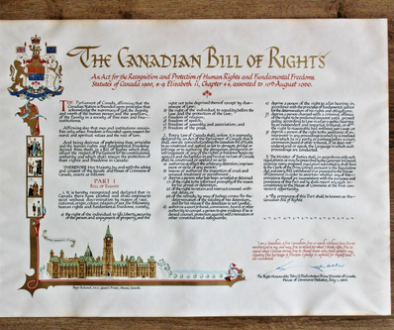
A New Council Sworn In: An Oath to Serve the Office, Not the Public.
A “new” council was sworn in at its inaugural council meeting on November 2. The new council, which features a 50-50 split between returning incumbents and new faces, was administered the Local Government Oath of Office by Provincial Court Judge George Leven. Alan Harrison remained in his position as “mayor.”
They did not take a public oath to serve the public, but rather an oath of office, to serve the office.
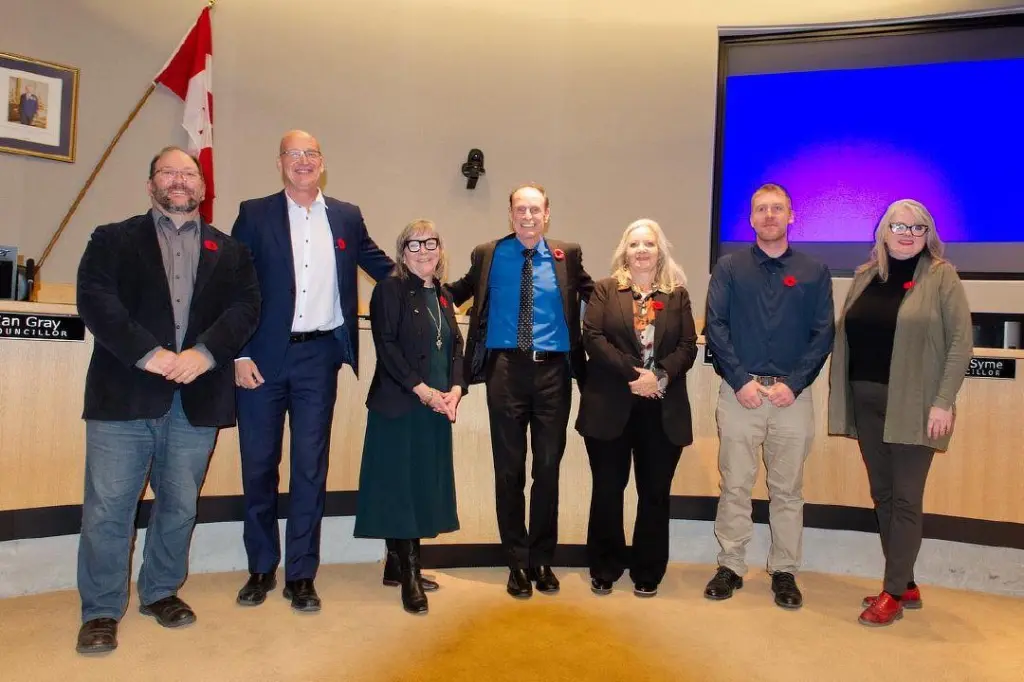
Mayor Alan Harrison, centre, and Couns. David Gonella, Ian Gray, Louise Wallace Richmond, Debbie Cannon, Scott Syme and Kari Toliver-Wilkinson
Almost 34% of residents voted in the last election, according to the same institutions that conducted the election. No independent observers or members of the opposition were present. Votes were counted using electronic tabulators.
According to the Canadian Centre for Cyber Security, there are significant risks associated with the use of electronic tabulators. In its most update, the Cyber Centre assesses that democratic processes across the globe remain a target of interest for cyber threat actors and that the likelihood for state-sponsored cyber actors to target Canadian elections is almost certain.
Based on the prevailing threat environment, it is very likely that cybercriminals and state-sponsored actors will target ballot counting and tabulation processes to achieve their overall objectives. The following are ways threat actors could launch attacks and target ballot counting and tabulation systems:
- taking over vote tabulation systems for the purpose of altering the results
- infiltrating device or systems-component manufacturers to compromise the supply chain for ballot counting and tabulation devices
- compromising elections record databases, resulting in unauthorized disclosure of confidential electronic voter records and undermining confidence in the democratic process
- disrupting vote tabulation system functions through exhaustion and destruction attacks such as distributed denial of service (DDoS) and ransomware attacks
- impersonating elections authorities to spread misinformation or falsehoods about the integrity of the process or devices to sow mistrust and erode confidence in the democratic process
- compromise privileged credentials to gain access to back-end systems to alter tabulation records or trigger further disruptive attacks
https://www.cyber.gc.ca/en/guidance/security-considerations-electronic-vote-tabulators-itsm10102
If any unsuccessful candidates want to request a manual recount of the votes, they must apply to the Supreme Court for a judicial recount, subject to three conditions:
- Ballots were incorrectly accepted or rejected.
- Ballot account does not accurately record the number of valid votes for a candidate.
- Final determination of results did not correctly calculate the total number of valid votes for a candidate.
So, it is almost impossible to do so. Local elections are the only way independent candidates can enter politics, but this is not possible when electronic tabulators are properly set up.
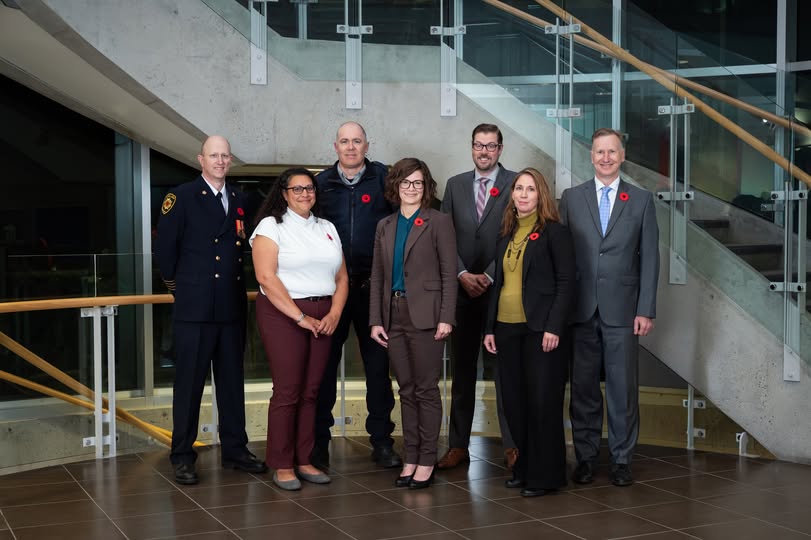
They always get their own minimum of four puppets, or actors, who vote according to the agenda’s wishes. As we mentioned before, the agenda is prepared by the administration, particularly by the specially trained Chief Administrative Officer. Just recently, the City of Salmon Arm published its leadersheep team.
Where does the agenda come from? The Municipal Primer is a guide, on how to implement UN Agenda 21, in the guise of sustainable development, at the municipal level, without your knowledge or consent.
There was a report published in 1994 called A Municipal Primer on the United Nations Conference of Environment and Development prepared for the Federation of Canadian Municipalities. This is where “sustainable development” is proposed to our local municipalities.
At the opening session of the Rio Earth Summit Maurice Strong, the United Nations Environment Program (UNEP) Secretary-General, made the following statements: “current lifestyles and consumption patterns of the affluent middle class – involving high meat intake, use of fossil fuels, appliances, home and work-place air-conditioning, and suburban housing – are not sustainable. A shift is necessary which will require a vast strengthening of the multilateral system, including the United Nations.”
Prime Minister Brian Mulroney signed Canada onto the UN Agenda 21 Program of Action at the Rio de Janeiro Earth Summit in 1992.
Local Agenda 21 Planning Guide, an introduction to Sustainable Development, was published by ICLEI (The International Council for Local Agenda 21 Initiative).
Following this, the Federation of Canadian Municipalities (FCM), of which Salmon Arm is a member, published a booklet promoting “Sustainable Development Through Local Strategic Actions: A Municipal Primer on the United Nations Conference on Environment and Development.”
On the top of that, as of the 2025–2027 FCM Board term, Louise Wallace Richmond, a Salmon Arm councillor, is listed as one of FCM’s British Columbia directors.
https://www.fcm.ca/en/about-fcm/board-directors/our-board-directors
In 2015, the United Nations adopted the 2030 Agenda for Sustainable Development, which established 17 Sustainable Development Goals (SDGs) to be pursued by 2030. The 2030 Agenda builds on earlier sustainable-development frameworks, including Agenda 21. Canada subsequently adopted and implemented initiatives to advance the 2030 Agenda and its Sustainable Development Goals.
https://www.canada.ca/en/employment-social-development/programs/agenda-2030.html
Now you know where the idea behind “Salmon Arm: Small City, Big Ideas” comes from and that the election is merely a selection of pre-chosen candidates.
DB